Choosing between polycarbonate and glass for your building project is one of the most critical decisions you’ll make during the design phase. While glass has been the traditional choice for decades, polycarbonate has emerged as a compelling alternative that offers distinct advantages in many applications. Understanding the strengths and limitations of each material is essential for making an informed decision that aligns with your project goals, budget, and performance requirements.
This comprehensive comparison examines every aspect of these two materials – from initial costs to long-term performance, from aesthetic considerations to practical maintenance requirements. By the end of this guide, you’ll have the knowledge needed to choose the right material for your specific application.
Cost Analysis: Initial Investment vs Long-Term Value
Initial Material Costs
At first glance, the cost comparison between polycarbonate and glass might seem straightforward, but the reality is more nuanced. Single-pane glass typically costs less per square foot than polycarbonate panels, but this comparison quickly becomes misleading when you consider performance equivalents.
To match the insulation performance of 6mm twin wall polycarbonate, you would need double or triple-pane glass units, which cost significantly more than polycarbonate. When comparing equivalent thermal performance, polycarbonate often provides 30-50% cost savings over glass systems.
Material Cost Breakdown (per square foot):
- Single-pane glass: $3-5 (minimal insulation)
- Double-pane glass: $8-15 (good insulation)
- Triple-pane glass: $15-25 (excellent insulation)
- 6mm twin wall polycarbonate: $4-7 (excellent insulation)
- 10mm triple wall polycarbonate: $6-10 (superior insulation)
Installation and Labor Costs
Polycarbonate’s lighter weight translates to significant savings in installation costs. Glass installations often require heavy-duty structural support, specialized lifting equipment, and experienced glaziers. Polycarbonate can often be installed with standard construction techniques and equipment, reducing both labor time and specialized skill requirements.
Long-Term Cost Considerations
The true cost comparison extends far beyond initial purchase and installation. Energy efficiency, maintenance requirements, and replacement costs over the building’s lifetime often determine the real value proposition.
Polycarbonate’s superior insulation properties can reduce heating and cooling costs by 25-40% compared to single-pane glass. Over a typical building’s 20-30 year lifespan, these energy savings often exceed the initial material cost difference.
Thermal Performance and Energy Efficiency
Insulation Properties
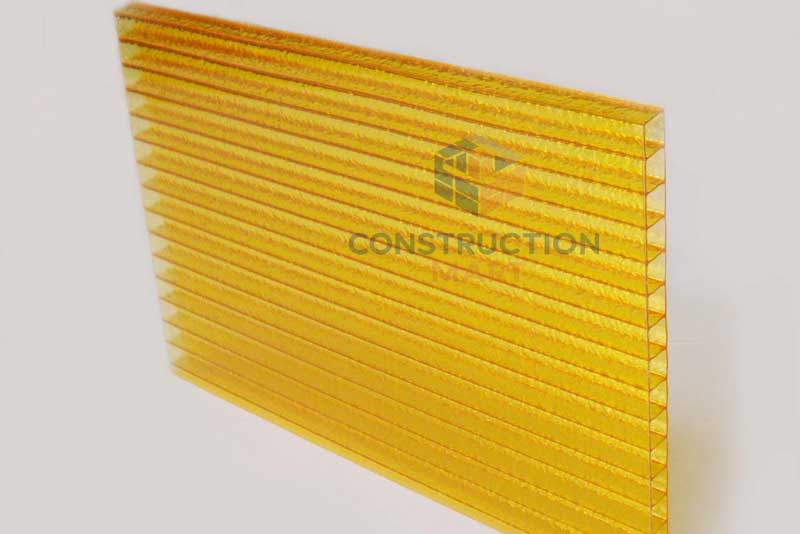
This is where polycarbonate truly shines. The multi-wall structure of polycarbonate panels creates insulating air chambers that dramatically reduce heat transfer. A 6mm twin wall polycarbonate panel provides insulation equivalent to double-pane glass, while weighing 80% less.
The thermal performance advantage becomes even more pronounced with thicker polycarbonate panels. A 16mm triple wall polycarbonate panel can achieve R-values comparable to triple-pane glass systems while maintaining structural simplicity and cost-effectiveness.
Thermal Performance Comparison (R-values):
- Single-pane glass (6mm): R-1.0
- Double-pane glass (typical): R-2.0 to R-3.0
- Triple-pane glass (high-performance): R-4.0 to R-5.0
- 6mm twin wall polycarbonate: R-1.7
- 10mm twin wall polycarbonate: R-2.5
- 16mm triple wall polycarbonate: R-3.5
- 25mm multi-wall polycarbonate: R-4.0+
Solar Heat Gain Control
Both materials can be modified to control solar heat gain, but they achieve this in different ways. Glass typically uses low-E coatings or tinting, while polycarbonate can incorporate UV-resistant additives and surface treatments.
Polycarbonate’s ability to filter UV radiation while maintaining visible light transmission makes it particularly effective for applications where occupant comfort and energy efficiency are both important.
Durability and Safety Considerations
Impact Resistance
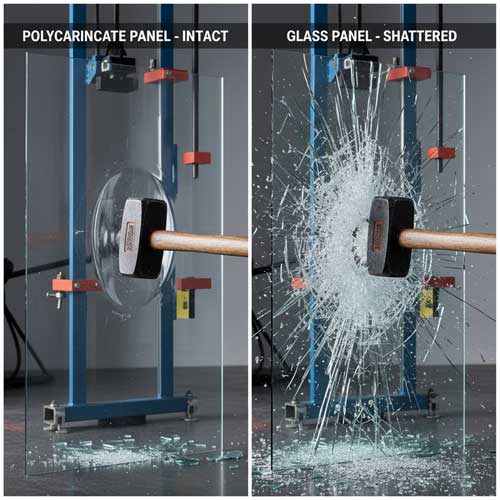
The most dramatic difference between polycarbonate and glass lies in impact resistance. Polycarbonate is virtually unbreakable under normal conditions, with impact strength nearly 250 times greater than glass. This characteristic makes polycarbonate the obvious choice for applications where safety, security, or durability are primary concerns.
Glass, while beautiful and traditional, presents inherent safety risks when broken. Even tempered safety glass can create dangerous situations if shattered, while polycarbonate maintains its structural integrity even when severely damaged.
Weather Resistance
Both materials can withstand normal weather conditions, but their responses to extreme weather differ significantly. Hail, flying debris, and thermal shock affect glass and polycarbonate differently.
Polycarbonate’s flexibility allows it to absorb impacts that would shatter glass. However, glass is generally more resistant to surface scratching and maintains its clarity longer in some environments. Quality polycarbonate with proper UV protection can last 20+ years with minimal degradation.
Fire Safety Performance
Fire safety characteristics vary between different types of glass and polycarbonate. Standard polycarbonate has specific fire ratings that must be considered for building code compliance. Some specialized glass types offer superior fire resistance, while fire-retardant polycarbonate formulations are available for applications with strict fire safety requirements.
Optical Properties and Aesthetics
Clarity and Light Transmission
High-quality glass offers exceptional optical clarity with light transmission rates of 90-92%. Clear polycarbonate typically achieves 85-88% light transmission, a difference that’s rarely noticeable in practical applications but can be important for specialized uses.
The slight difference in clarity becomes less significant when considering that polycarbonate’s superior insulation properties often eliminate the need for multiple glass panes, which reduce overall light transmission through reflection losses.
Aesthetic Flexibility
Glass offers timeless aesthetic appeal and can be manufactured in various tints, textures, and patterns. However, polycarbonate provides unique aesthetic opportunities through its structural possibilities – curved surfaces, large spans, and integrated textures that would be impractical or impossible with glass.
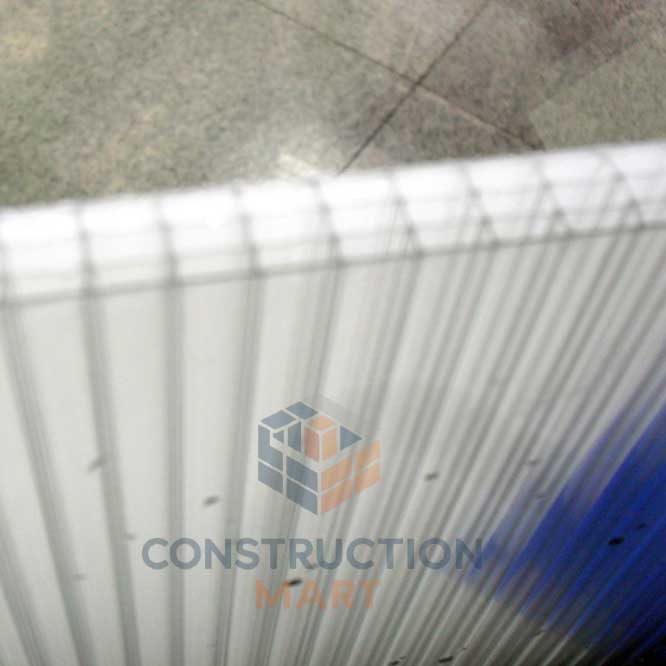
Textured polycarbonate surfaces, such as crystal bright or diamond patterns, create light effects that glass cannot replicate. These textures add visual interest while providing functional benefits like privacy and glare reduction.
Maintenance and Longevity
Cleaning and Upkeep
Glass generally requires more frequent cleaning to maintain optimal appearance, as water spots, fingerprints, and other marks are more visible on perfectly smooth surfaces. Polycarbonate’s slightly textured surface can hide minor marks while still providing excellent light transmission.
However, polycarbonate requires more careful cleaning techniques to avoid scratching. Abrasive cleaners or tools that might be acceptable for glass can damage polycarbonate surfaces. Proper maintenance protocols are essential for both materials but differ in their specific requirements.
Replacement and Repair
When damage does occur, polycarbonate panels are typically easier and less expensive to replace than glass units. The lighter weight and simpler installation requirements mean that repairs can often be completed more quickly and with less disruption.
Glass replacement, particularly for large or complex installations, often requires specialized contractors and equipment, leading to higher costs and longer lead times for repairs.
Lifespan Expectations
Quality glass installations can last 50+ years with proper maintenance. Polycarbonate, while newer to the market, has demonstrated 20-30 year lifespans with minimal degradation when properly manufactured with UV protection.
The shorter proven lifespan of polycarbonate is partially offset by its lower replacement cost and easier installation, making the lifetime cost equation more complex than simple durability comparisons might suggest.
Application-Specific Considerations
Greenhouse and Agricultural Applications
For greenhouse applications, polycarbonate offers clear advantages in terms of insulation, impact resistance, and cost-effectiveness. The superior thermal performance directly translates to reduced heating costs, while impact resistance provides protection against hail and maintenance accidents.
Glass greenhouses, while beautiful, require more sophisticated structural support and heating systems to achieve comparable performance. The higher initial cost and ongoing energy requirements make glass less economical for most agricultural applications.
Commercial and Industrial Buildings
Commercial applications often favor polycarbonate for daylighting applications due to its cost-effectiveness and safety characteristics. The ability to create large glazed areas without excessive structural support makes polycarbonate ideal for warehouses, manufacturing facilities, and retail spaces.
Glass remains preferred for high-end commercial applications where prestige and traditional aesthetics are priorities, despite the higher costs and complexity involved.
Residential Applications
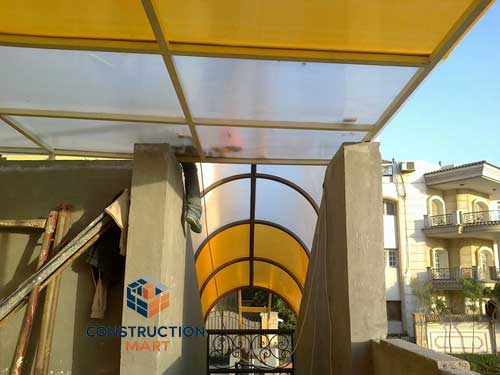
Residential choices between glass and polycarbonate often come down to specific application requirements and homeowner preferences. Polycarbonate excels in applications like sunrooms, pool enclosures, and patio covers where insulation, safety, and cost are primary concerns.
Glass maintains advantages in applications where maximum clarity and traditional aesthetics are desired, such as windows and architectural glazing where prestige and resale value are considerations.
Environmental Impact and Sustainability
Manufacturing Environmental Impact
The environmental impact of manufacturing varies significantly between glass and polycarbonate. Glass production requires high-temperature furnaces and significant energy input, while polycarbonate manufacturing involves chemical processes with different environmental considerations.
Both materials can be manufactured with increasing environmental responsibility, but the specific impacts depend on manufacturing methods, energy sources, and transportation requirements.
End-of-Life Considerations
Glass is highly recyclable and can be reprocessed indefinitely without quality degradation. Polycarbonate recycling is more complex but increasingly available as recycling infrastructure develops.
The longer service life potentially achievable with glass must be balanced against polycarbonate’s lower embodied energy and transportation requirements due to its lighter weight.
Energy Performance Impact
The superior insulation properties of polycarbonate can result in significant energy savings over the building’s lifetime, potentially offsetting any manufacturing environmental impact through reduced heating and cooling requirements.
Decision-Making Framework
When to Choose Polycarbonate
Polycarbonate is the optimal choice when:
- Energy efficiency and insulation are primary concerns
- Impact resistance and safety are critical requirements
- Large spans or complex geometries are needed
- Budget constraints require cost-effective solutions
- Installation simplicity is important
- Weight limitations exist in the structural design
When to Choose Glass
Glass remains the better choice when:
- Maximum optical clarity is essential
- Traditional aesthetics and prestige are priorities
- Extreme longevity is required (50+ years)
- Fire resistance requirements are stringent
- Scratch resistance is critical
- Recycling and environmental considerations favor glass
Making the Right Choice for Your Project
The choice between polycarbonate and glass isn’t about finding a universally superior material – it’s about matching material properties to specific project requirements. Both materials have earned their place in modern construction through distinct advantages that serve different needs and priorities.
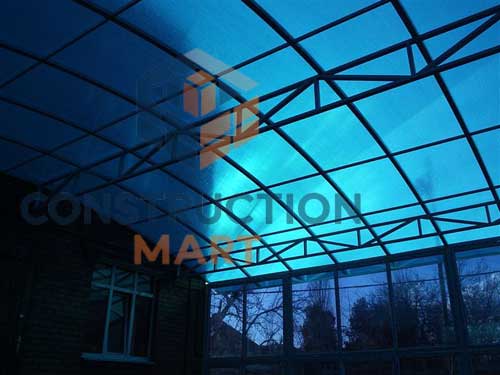
Polycarbonate excels in applications where energy efficiency, safety, cost-effectiveness, and installation simplicity are priorities. Its superior insulation properties and impact resistance make it particularly valuable for agricultural, industrial, and many commercial applications.
Glass maintains its relevance in applications where optical clarity, traditional aesthetics, and extreme longevity are paramount. High-end commercial installations, architectural glazing, and applications with specific optical requirements often justify glass’s higher costs and complexity.
The key to making the right choice lies in thoroughly understanding your project’s specific requirements, constraints, and priorities. Consider not just the initial costs, but the total lifecycle value including energy performance, maintenance requirements, and replacement costs.
As building codes evolve toward greater energy efficiency and sustainability requirements, polycarbonate’s advantages in these areas position it as an increasingly attractive option for forward-thinking builders and designers. However, glass’s timeless appeal and proven track record ensure its continued relevance in appropriate applications.
Ultimately, the best material choice is the one that most effectively serves your project’s unique combination of functional requirements, aesthetic goals, budget constraints, and long-term performance expectations.